Best Robot Vacuums Guide
The Guide · Robot Vacuums for Busy Households

The biggest number on the box is the least comparable.

The robots we compared claim suction from 5,000 to 36,000 Pa. Shark, one of the best-known names in the category, prints no pascal figure on any of its five listings here, and iRobot explains its numbers by comparing each Roomba with an older one. If suction decided the clean, choosing would mean reading one number. It doesn’t: none of these listings says how its figure was measured, and a powerful robot that wanders at random still misses the floor under the dining table. What separates a robot you forget about from one you rescue every other day is how it navigates, how its brushes cope with hair, what its dock does without you, and what kind of mop it carries. We compared published specifications, manufacturer claims and current Amazon prices for every robot vacuum on our US shortlist.

By Ilane Tall6 picks · 35 robot vacuums comparedResearch-based — no testing lab, no invented scores

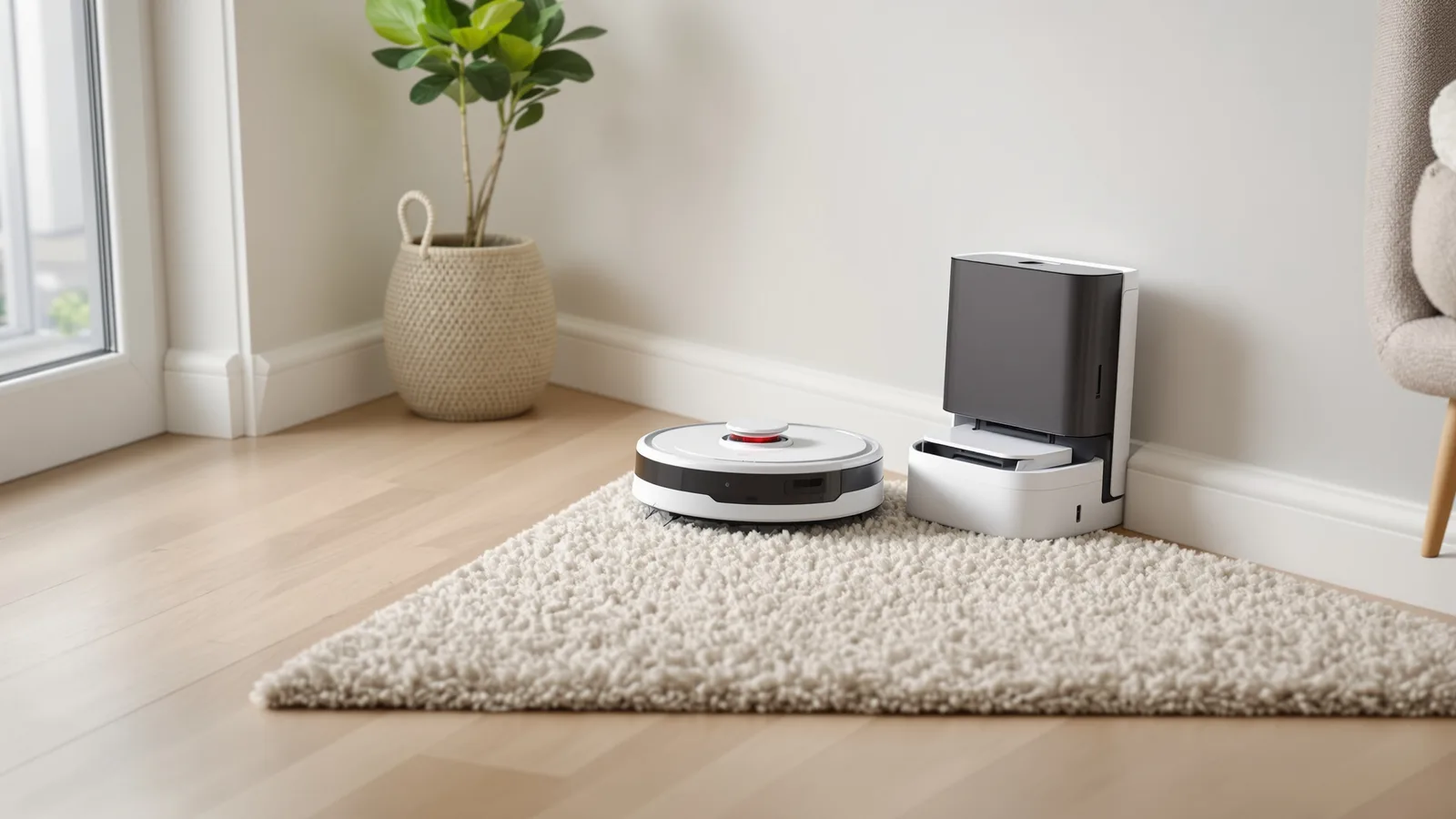
Round robot vacuum with a small laser turret crossing from a light oak floor onto a cream wool rug, its tall self-emptying dock against the living room wall
The one to buy

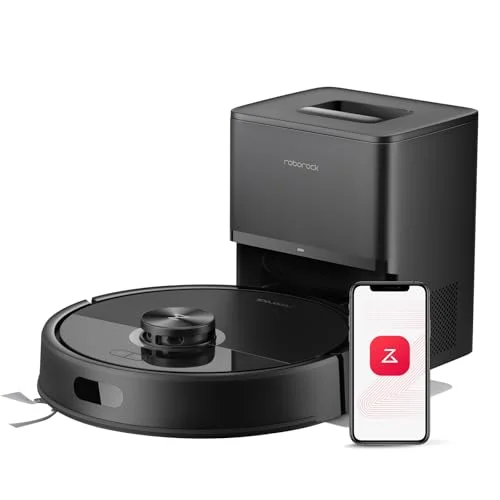
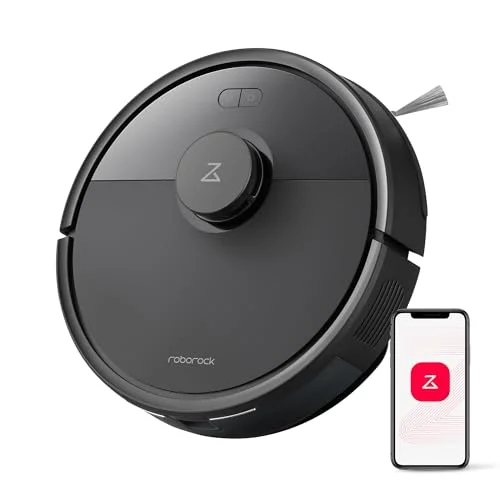
Roborock Q7 M5+ with Self-Empty Dock

The Q7 M5+ gets the three things that decide a robot vacuum right, at a mid-range price. It navigates by LiDAR — Roborock calls its version PreciSense — so it works from a map instead of bouncing between chair legs until the battery runs low. Its JawScrapers main brush and a side brush Roborock describes as 0% hair-tangling are designed against hair wrap, the most tedious chore any robot creates. And its RockDock Plus empties the robot into a sealed 2.7-liter bag the maker says lasts up to seven to nine weeks.

Roborock lists 10,000 Pa of suction, modest beside the flagships in our comparison and, for the reasons above, beside the point. For most homes — hard floors and rugs, perhaps a pet, nobody who wants to think about the robot more than once every couple of months — this is the spend that buys almost all of the benefit, and the money above it goes mostly on mopping.

The honest caveat: we would not buy it for mopping. The title says vacuum and mop, but the listing describes no water tank, no mop lift and no mop washing, so there is nothing to judge its mopping on; the Qrevo S Pro below washes and dries its own mops. The dock runs on bags, a small recurring cost, and the listing does not mention obstacle avoidance, so pick up cables and socks first.

LiDAR navigation·10,000 Pa listed·Self-empty dock, 2.7-liter bag·Dual anti-tangle brushes
Roborock Q7 M5+ robot vacuum on its RockDock Plus self-emptying dock
Price
$199.99
Check price on Amazon →

Prices change. We refresh them, but Amazon is the authority.

Before you buy

Four things decide this purchase. The suction figure is not one of them.

Navigation decides how much floor gets cleaned

A robot that knows where it has been cleans differently from one that doesn’t. LiDAR robots spin a laser sensor to map the room: Roborock describes 360-degree scanning on the Q7 L5, and iRobot says ClearView LiDAR lets the Roomba 105 clean in neat rows. The map is what makes the app worth opening; several listings here save up to five floor maps and let you draw no-go zones. Flagships add cameras and 3D sensors to recognize objects. A listing that names no mapping system, like the remote-controlled ILIFE V2, usually means bump-and-turn cleaning.

The dock decides how often you touch it

A plain base only charges. A self-emptying dock pulls the robot’s bin into a bag or bin of its own, and makers quote its capacity in days: 30 or 60 for Shark’s bagless bases, seven to nine weeks for Roborock’s 2.7-liter bag, up to 90 for the Roomba Max 715. Those figures assume each maker’s idea of a typical home, so a shedding dog shortens them. Bags cost money but go in the trash sealed; bagless bases cost nothing to run but have to be tipped out. The top docks also wash and dry the mops.

A damp pad, spinning pads or a roller

Vacuum-and-mop covers very different machines. At the simple end, a robot drags a damp pad from a small tank; Tikom’s G8000 carries 300 ml of water. Spinning pads press down and rotate, and the better docks wash them: the Qrevo S Pro heats its wash water to 167°F. Roller mops rinse themselves as they go; eufy says the E25 refreshes its roller with clean water twice a second. If you have rugs, look for a mop that lifts or detaches on carpet, as the Qrevo S Pro, the Q10 S5+ and the Roomba Plus 678X list.

Clearance, thresholds and hair

Clearance: the ILIFE V2 is 2.99 inches tall, the Lefant M210 85 mm, and Roborock says the Saros 20 fits under furniture as low as 3.13 inches, so measure under your sofa and bed first. Thresholds: few listings publish a climbing height; Roborock claims 3.46 inches over double-layer steps for the Saros 20 and Qrevo Edge 3 Pro, and door strips and rug edges are where robots get stranded. Hair: rubber main brushes, comb-style rollers and zero-tangle side brushes cut down the scissors routine; look for a named design rather than a slogan.

Side by side

The six, compared

RobotBest forListed suctionNavigationDockMopPriceGet it
Roborock Q7 M5+ Most homes 10,000 Pa LiDAR Self-empty, 2.7-liter bag Listed, type not stated $199.99 Get it
Roborock Qrevo S Pro Vacuuming and mopping 18,500 Pa Not listed Empties, washes mops at 167°F, dries Liftable spinning mops $379.99 Get it
iRobot Roomba Max 715 Carpet and pet hair 30,000 Pa PrecisionVision Self-empty, bags, up to 90 days None $379.05 Get it
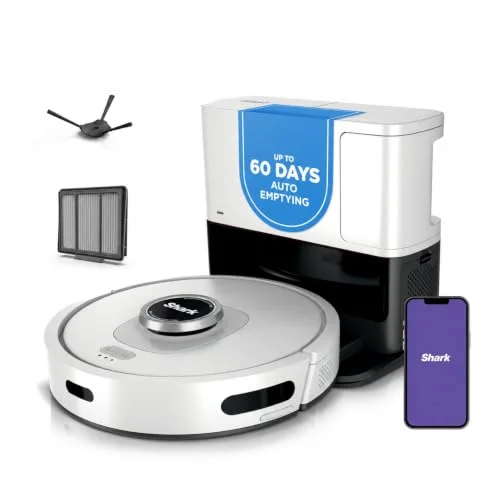
Shark AI Ultra AV2511AE No bags to buy Not listed LiDAR, Matrix Clean Bagless self-empty, up to 60 days None $249.99 Get it
eufy E35 Mopping, top tier 35,000 Pa Not listed Self-empty, hot wash and dry Self-cleaning roller $799.99 Get it
Roborock Q7 L5 Mapping on a budget 8,000 Pa LiDAR, 360° Charging only Listed, type not stated $119.99 Get it
The six

Our picks, and who each one is for

01Best overall

Roborock Q7 M5+ Robot Vacuum with Self-Empty Dock

Best for most homes

PreciSense LiDAR·10,000 Pa listed·2.7-liter bag, 7–9 weeks·Dual anti-tangle

The pick that gets the expensive parts of a robot vacuum right without flagship money. PreciSense LiDAR gives it a map, so it covers the floor in planned passes rather than ricocheting between chair legs. The JawScrapers main brush and the 0% hair-tangling side brush are designed to resist hair wrap, even from long-haired breeds, according to Roborock. The RockDock Plus empties the bin into a sealed 2.7-liter bag good for up to seven to nine weeks. The 10,000 Pa claim sits in the lower half of our comparison, which matters less than it looks. Not in the listing: any description of the mop, or obstacle avoidance.

Buy this for clean floors and a dock you empty every couple of months, if mopping is not the point.

Roborock Q7 M5+ robot vacuum with self-empty dock
Price
$199.99
Check price →
02Best vacuum-mop

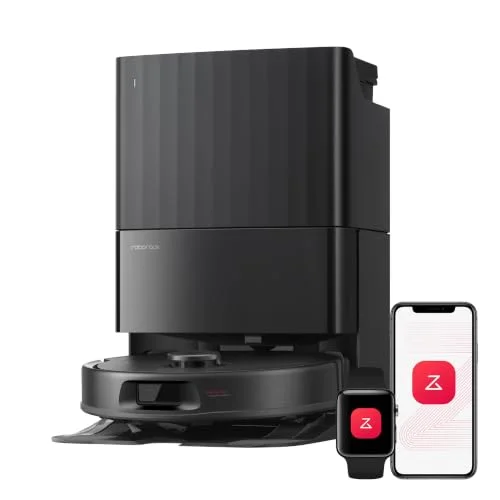
Roborock Qrevo S Pro Robot Vacuum and Mop

Best for vacuuming and mopping without touching a mop

18,500 Pa listed·167°F mop washing·113°F warm-air drying·Liftable spinning mops

The all-in-one dock at a sensible price. After each run it empties the robot into a sealed 2.7-liter bag, washes the spinning mops with 167°F water and dries them with 113°F air, so they don’t sit damp in the base. The mops lift, which matters on floors that mix hard surfaces and rugs, and the brushes are built for hair: an all-rubber main brush and a zero-tangle side brush. Two honest limits: the listing names smart obstacle avoidance but no navigation system, and it doesn’t say how the dock gets its water; most mop-washing docks use tanks you fill and empty yourself.

If you want both kinds of floor cleaned and never want to rinse a mop pad again, stop spending here.

Roborock Qrevo S Pro robot vacuum and mop with multifunction dock in black
Price
$379.99
Check price →
03Best for carpet

iRobot Roomba Max 715 with AutoEmpty Dock

Best for carpets, rugs and pet hair

30,000 Pa listed·Dual rubber brushes·Self-empties up to 90 days·Vacuum only

The same tier of money as the Qrevo S Pro, spent entirely on vacuuming. There is no mop. Instead, iRobot fits dual rubber brushes that flex to stay in contact with different floors and are designed to stop hair wrap, an anti-tangle side brush, and Carpet Boost, which raises suction automatically on carpets and rugs. The listed 30,000 Pa is, by iRobot’s own comparison, four times the suction of the Roomba 105. The AutoEmpty dock uses odor-control AllergenLock bags and covers up to 90 days, iRobot says. The title names PrecisionVision without the listing explaining it, and hard-floor spills stay your job.

For carpet-heavy homes and shedding pets, put the money into the vacuum and keep a mop in the closet.

iRobot Roomba Max 715 robot vacuum with AutoEmpty dock
Price
$379.05
Check price →
04Best bagless

Shark AI Ultra Robot Vacuum AV2511AE

Best for a self-emptying base with no bags to buy

LiDAR mapping·Matrix Clean grid·Bagless base, up to 60 days·HEPA, per the title

Shark quotes no pascal figure — the listing promises high suction power and leaves it there — and the AI Ultra makes the case that navigation matters more than the missing number. It maps with LiDAR and cleans in what Shark calls Matrix Clean, a precise grid that takes multiple passes over messes. The bagless base holds up to 60 days of dirt and debris, so there is nothing to reorder, and the title lists HEPA filtration and an anti-hair-wrap design. The trade-offs: bagless means tipping fine dust into the trash yourself, the listing describes no mop, and there is no suction figure to compare.

The right robot if reordering bags annoys you more than emptying a bin every couple of months.

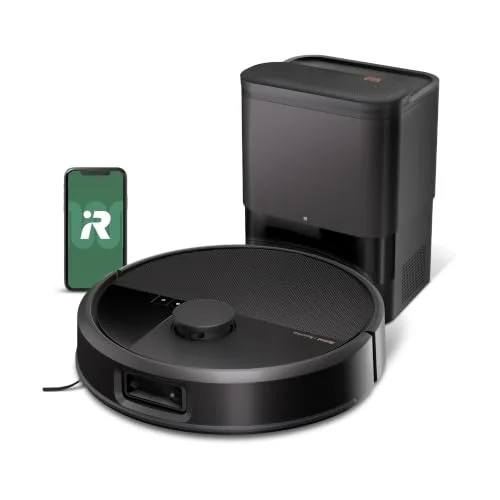
Shark AI Ultra AV2511AE robot vacuum with bagless self-empty base
Price
$249.99
Check price →
05Best premium

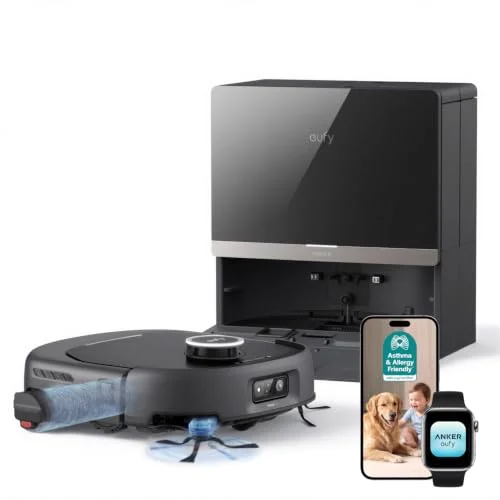
eufy E35 Robot Vacuum and Mop

Best for top-tier mopping on hard floors

35,000 Pa listed·Self-cleaning roller mop·16 N mop pressure·Hot wash and dry

The E35 is built around its mop. Instead of spinning pads that wait to be washed at the dock, it uses a roller that eufy’s HydroJet 2.0 rinses eight times a second through 32 jets while two scrapers strip the dirty water away. The roller presses down with a constant 16 newtons, which eufy aims at dried sauce, grease and coffee. Suction is listed at 35,000 Pa with five-layer filtration, and the listing cites asthma & allergy friendly certification from AAFA and ASL. This is a premium machine at a premium price, and the listing names no navigation system and no dock bag capacity.

If most of your home is hard floor and you want it washed rather than wiped, stretch for this one.

eufy E35 robot vacuum and mop with roller mop and station
Price
$799.99
Check price →
06Best budget

Roborock Q7 L5 Robot Vacuum and Mop

Best for LiDAR mapping on a budget

360° LiDAR·8,000 Pa listed·Multi-level maps·Charging base only

The budget pick, and proof that mapping no longer needs flagship money. The Q7 L5 scans the home with 360-degree LiDAR in real time, plans its route and saves multiple floor maps, so it can clean upstairs and down if you carry it. It shares the anti-tangle idea of the Q7 M5+, with a specially designed main brush and a zero-tangle side brush, and Roborock lists 8,000 Pa. The difference is the base: this one only charges, so you empty the onboard bin by hand as often as your floors and pets demand. As with its sibling, the listing says nothing about how the mop works.

Mapping is the feature that matters most, and this is the plainest way to buy it.

Roborock Q7 L5 robot vacuum and mop in black
Price
$119.99
Check price →
Our method

How we picked — and what we can’t tell you

What we did

Specs, prices and manufacturer claims

We compared published specifications and current Amazon prices for 35 robot-vacuum listings — about thirty distinct models once color variants and duplicates are folded together — from remote-controlled basics to flagship docks that wash their mops in 212°F water. We weighted navigation first, because a robot that maps covers a floor in a way a random one cannot; then what the dock does unattended, the mop design, and the brushes against hair. We treated suction figures with suspicion, because no listing explains how its number was measured. Where a spec is not published, our table says so.

What we didn’t

We don’t run a testing lab

We do not physically test these robots, we do not own them, and we do not publish invented scores out of ten. We also have no verified rating data for this category, so this site publishes no ratings of any kind — we would rather show nothing than make something up. How a battery holds its runtime, how a dock’s pumps and seals age, whether the app stays supported: only years of daily use answer those. What we can do honestly is read every specification, compare them, and explain the mechanics behind them.

Go deeper

The guides behind the picks

FAQ

Common questions

Is a robot vacuum worth it if I already own a regular vacuum?

Yes, as long as you see it as a maintenance cleaner rather than a replacement. Run daily or every other day, a robot keeps crumbs, dust and pet hair from building up. It does not do stairs, upholstery, curtains or the car, and even a well-mapped robot misses the odd corner. Most homes keep a stick or upright vacuum for those jobs and for occasional deep cleans. A robot pays off when it runs without supervision, which is why navigation and a self-emptying dock matter more than any suction figure.

Does higher suction (Pa) mean a better robot vacuum?

Not across brands. A pascal figure describes the pressure difference a robot’s fan can create, and each maker measures it its own way; none of the listings we compared explains its method, and Shark’s quote no figure at all. Within one brand’s range, a bigger number usually does mean a stronger fan. On carpet, brush design and the seal against the floor matter as much as raw suction — iRobot says its SealForce design concentrates vacuuming power on carpet fibers. Read navigation, brushes and the dock first, then use suction to separate two otherwise similar robots.

LiDAR or camera navigation: which is better?

LiDAR is the dependable baseline: a spinning laser measures the distance to walls and furniture, builds an accurate map and works in the dark. Cameras and 3D sensors add object recognition. Roborock says the Saros 20 combines 3D time-of-flight sensors with an RGB camera to identify more than 300 obstacles. If you rarely pick up cables, socks and pet bowls before cleaning, obstacle recognition is worth paying for; if your floors stay clear, LiDAR alone is enough. A robot with a camera also deserves a look at the maker’s privacy settings.

Do robot vacuum and mop combos really mop?

It depends on the mop. Basic combos drag a damp pad from a small water tank: fine for dust and footprints, not for dried spills. Spinning pads press down and scrub, and the better docks wash them in hot water and dry them so they don’t sour between runs. Roller mops rinse themselves continuously; eufy says the E35’s roller is refreshed eight times a second. None of them replaces scrubbing a sticky floor by hand every time, but daily mopping keeps hard floors from getting there. If you have rugs, make sure the mop lifts or detaches on carpet.

Are robot vacuums good for pet hair?

Yes, if the brushes are built for it. Hair wraps around bristle rollers and axles, and a robot that needs cutting free every few days stops being automatic. Look for a named anti-tangle design rather than a slogan: rubber main brushes like iRobot’s, comb-style rollers like Roborock’s JawScrapers, or a brushless suction inlet like Lefant’s. Pair that with a self-emptying dock, since a small onboard bin fills fast in a shedding home. If your pet knocks over food bowls or has the occasional accident, obstacle recognition is worth the step up.

Can a robot vacuum handle thick carpet and door thresholds?

Low- and medium-pile carpet, yes; deep shag is where most robots struggle. Several listings raise suction automatically on carpet — iRobot’s Carpet Boost, the Qrevo 2 Pro, Tikom’s L8000 Plus — and Roborock says the Saros 20 cleans carpet up to 1.18 inches deep. Thresholds are the other trap: door strips, rug edges and steps into sunken rooms. Few listings publish a climbing height; Roborock claims 3.46 inches over double-layer thresholds for the Saros 20 and Qrevo Edge 3 Pro. Measure your tallest threshold before you buy.

Bagged or bagless self-emptying dock: which is better?

Bags cost money and seal the dust in; bagless bases cost nothing to run and need emptying. A bagged dock such as Roborock’s RockDock or iRobot’s AutoEmpty goes in the trash closed — iRobot says its bag traps 99% of allergens as small as 0.7 microns. A bagless base such as Shark’s or iMartine’s has to be tipped out, and some fine dust escapes when it is. The capacity quoted in days is each maker’s estimate for a typical home. If dust exposure is your concern, choose bags; if reordering consumables bothers you more, go bagless.